
Last week, I joined engineers, researchers and business leaders in Bellevue, Wash., for the Alliance for Telecommunications Industry Solutions (ATIS) Workshop on Synchronization and Timing Systems (WSTS), a leading forum focused on innovation in synchronization, timing and Positioning, Navigation and Timing (PNT) technologies.
This year’s workshop focused on how industries can maintain reliable timing and positioning services when GPS signals are disrupted. As concerns grow around GPS reliability and resilience, interest in terrestrial backup technologies continues to increase.
One of the most significant developments presented during the conference demonstrated that Broadcast Positioning System (BPS) can provide not only precision timing, but also highly accurate positioning capability.
During the workshop, Dr. Thejesh N. Bandi of The University of Alabama presented research conducted in collaboration with Jeffrey A. Sherman of the National Institute of Standards and Technology (NIST), along with University of Alabama researchers Jahnvi Verma and Thomas Roden, demonstrating BPS-based positioning performance with approximately 3.38-meter ground distance accuracy, comparable to positioning accuracy commonly associated with GPS-based services.
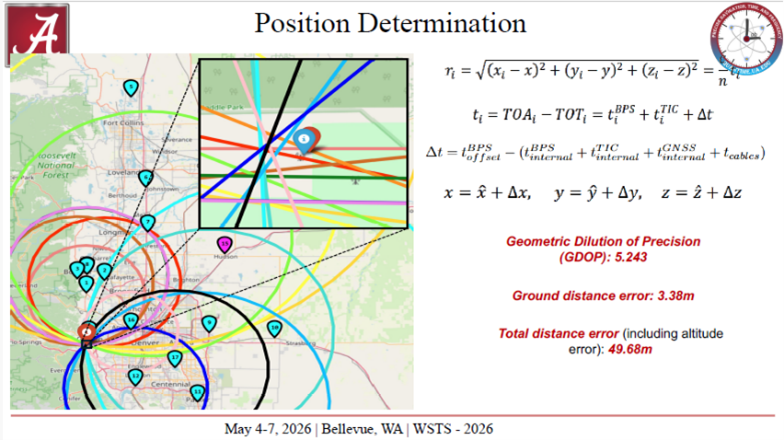
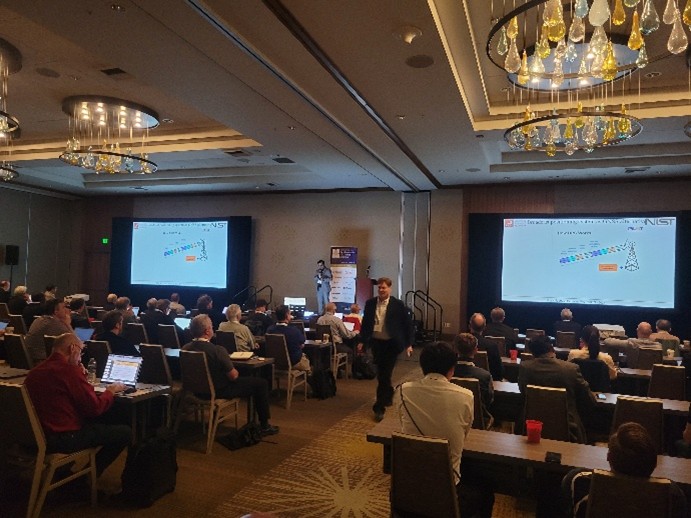
This is one of the first known field experiments of terrestrial broadcast signals achieving this level of positioning precision using BPS architecture.
The research included modeling, signal analysis and field measurements conducted with students working alongside NAB collaborators and federal partners. Measurements performed in collaboration with NIST previously demonstrated that BPS time transfer performance can achieve stability levels comparable to that of GPS-referenced timing systems. The positioning work presented at WSTS extends that technical foundation into terrestrial positioning capability.
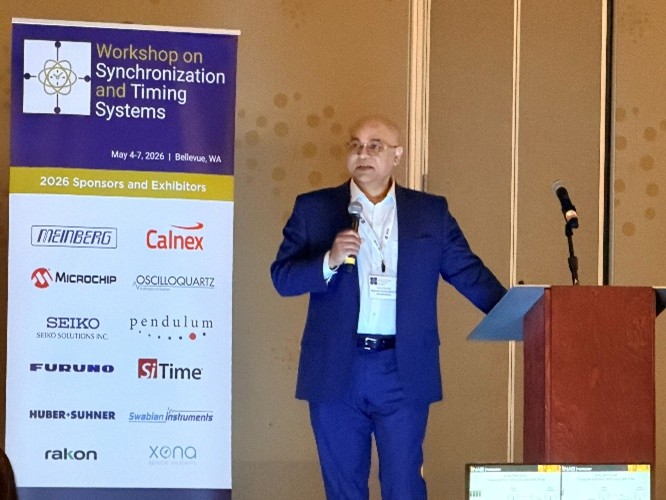
At the conference, I presented updates on Broadcast Positioning System (BPS) deployments, industry collaborations and NAB’s ongoing work developing a leader-follower BPS architecture designed to provide Global Navigation Satellite Systems (GNSS)-independent timing capabilities for critical infrastructure.


Broadcasters are uniquely positioned to support resilient terrestrial PNT services because of the geographic reach, reliability and robustness of broadcast transmission infrastructure. The work presented in Bellevue reflects how broadcasters continue advancing technologies that strengthen America’s infrastructure resilience.